
This is the comprehensive introduction to B2B SEO—so you might want to read this one over lunch. Here’s the executive summary:
- Your 2026 B2B SEO strategy should focus on exposure over traffic, providing non-generic insight, and signaling product category relevance.
- Businesses don’t search; people do. Whether it’s B2B or B2C, your SEO strategy needs to be about the people you’re trying to reach.
- Algorithms are the gatekeepers. If any real humans are going to find you via search, you’ll need to appeal to the machines they use (i.e., traditional search engines and AI platforms).
- Your B2B SEO strategy should answer 3 questions:
This guide will give you the best practices you need to build your own B2B SEO strategy.
B2B SEO in 2026: fewer clicks, more AI answers
In some ways, B2B search engine optimization hasn’t changed. You still need to provide content that your audience finds helpful. It’s still important to create content that other sites link to. And you still need to make sure you’re not wasting time chasing vanity metrics.
However, two major shifts have occurred in B2B SEO since I published the first version of this post way back in 2018:
- Organic clicks have gone down. About 60% of Google searches result in zero clicks. Ranking high in search engines isn’t the traffic-earner that it used to be.
- More questions are being answered by AI. Platforms like ChatGPT, Perplexity, and Gemini continue to gain popularity, and Google continues to put AI overviews into search results (about 30% of SERPs get AI Overviews these days).
It’s also important to note that the content competition is fiercer these days. In 2018, most of my B2B clients could simply publish 3,000-word blog post, call it an “ultimate guide,” and show up in the top Google results a few weeks later. It is nowhere near that easy today—especially when anyone can hand ChatGPT and get a 6,000-word thesis in an afternoon.
Because of these changes, an SEO strategy from even a few years ago is probably out of date today. Let’s unpack a few 2026-specific issues you need to account for, and then we’ll get into the nitty-gritty on how to build your B2B SEO strategy.
Big shift #1: Zero-click marketing and B2B SEO
There was a time when SEO was all about getting people to your site from Google. That’s still something your SEO strategy should be doing, but as Google searches result in fewer and fewer clicks to those top ten blue links, you’re going to need to think beyond clicks yourself. The term for this discipline is “zero-click marketing,” and it applies to all aspects of digital marketing, not just SEO.
Smart B2B SEOs aren’t just competing for clicks. They’re competing for exposure. It’s not enough to have your website rank in the first three organic positions anymore—especially if those blue links are buried under two thumb-scrolls’ worth of AI overviews and ads. Google has shifted organic links down, so your B2B strategy needs to shift up.
This means you don’t just want your blog post to rank for “best XYZ software.” You also want your product name listed in the AI Overview that Google puts front and center.
Remember: for most B2B companies, SEO is about discoverability. And the real goal of discoverability is to get on the potential buyer’s shortlist. Winning traffic to your website is great, but it’s far more important to get people who fit your ideal customer profile to associate your offerings with the solutions they’re looking for.
Big shift #2: Optimizing for both Google and LLMs
No, people are NOT abandoning Google for AI answer engines. (In fact, traditional search engines grew in their share of all internet visits year over year between Q3 2024 and Q3 2025.) However, these large language models (LLMs) like ChatGPT, Perplexity, Gemini, and the like have emerged as another type of channel that people use to find information.
Optimizing for these AI tools is not the same as optimizing for traditional search engines. However, because Google tops off their SERPs with AI Overviews, any B2B SEO strategy needs to account for these tools. We’ve already published guides on tools that will help you with answer engine optimization (AEO) and practical principles for setting up your approach to AEO monitoring, and I have some more content in the works for helping marketers build a B2B AEO strategy.
But this about B2B SEO. And the main things you should know are:
- People haven’t stopped Googling things. Traditional SEO is still important.
- LLMs are like content personal shoppers: they’re often running web searches of their own to generate answers.
- SEO is about making your pages show up in SERPs; AEO is about making your information show up in AI-generated responses. There’s overlap in tactics, but they’re not one and the same.
These are the two biggest ways I’ve seen B2B SEO change in the past year, and anyone doing B2B SEO in 2026 should keep these in mind.
What is B2B SEO?
SEO (search engine optimization) is the science of getting your Web pages to show up when people use search engines. Which means,
B2B SEO = the science of reaching professionals via search engines
That could include:
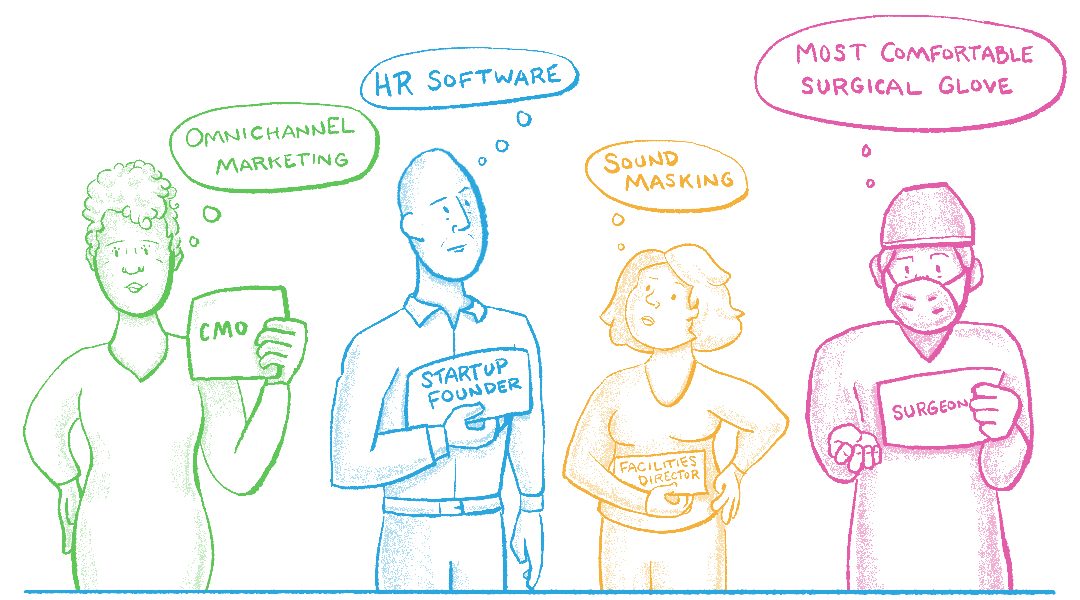
- A CMO searching for “omnichannel marketing”
- A startup founder searching for “HR software”
- A facilities director searching for “sound masking”
- A surgeon searching for “most comfortable surgical gloves”
On-page, Off-page, and Technical SEO
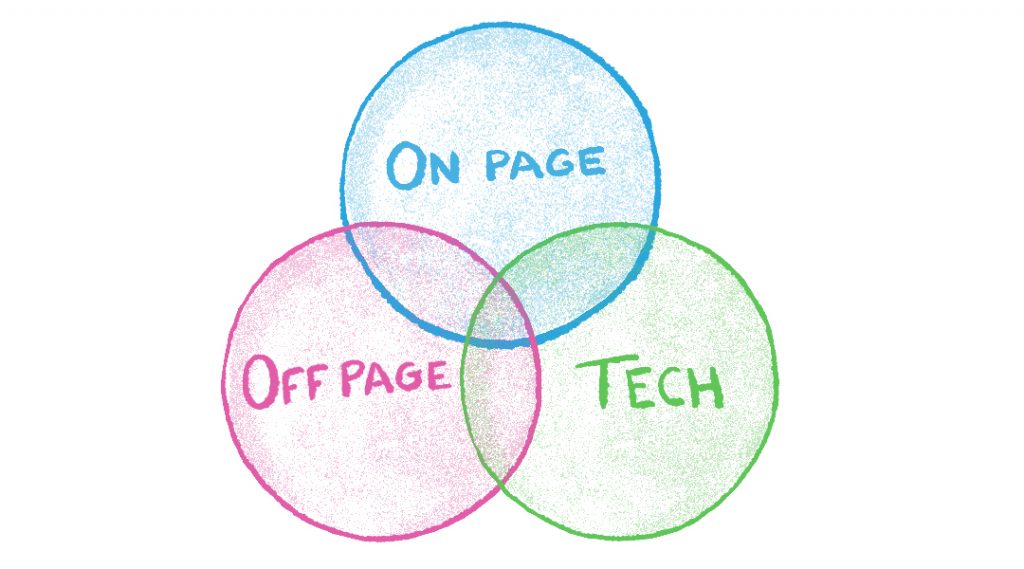
There are three general categories of SEO: on-page SEO, off-page SEO, and technical SEO.
On-page SEO deals with the content itself that you’re serving up—which is why some people call it “content SEO.” When you’re talking about structured content, user experience, titles and meta descriptions, you’re talking about on-page SEO.
Off-page SEO is everything that happens on other web pages that helps a certain page rank in search engines. Off-page SEO includes building inbound links from other sites, connecting your pages to each other through internal links, search demand generation, and some forms of content distribution.
Technical SEO is (generally) the behind-the-scenes stuff. It’s making sure your website is friendly to the technology that powers search. When you hear terms like “schema,” “AMP,” and “SSL,” you’re in technical SEO territory.
There’s a good deal of overlap here. For example, the faster your page loads, the better it will rank in Google—that’s both on-page and technical SEO.
Or for another example, comprehensive, long-form content tends to include more keywords and get more links from reputable sites. That’s both on-page and off-page SEO.
Although B2B companies should understand technical SEO, it’s not really B2B-specific. So this article pays much closer attention to on- and off-page SEO.
B2B SEO vs. B2C SEO
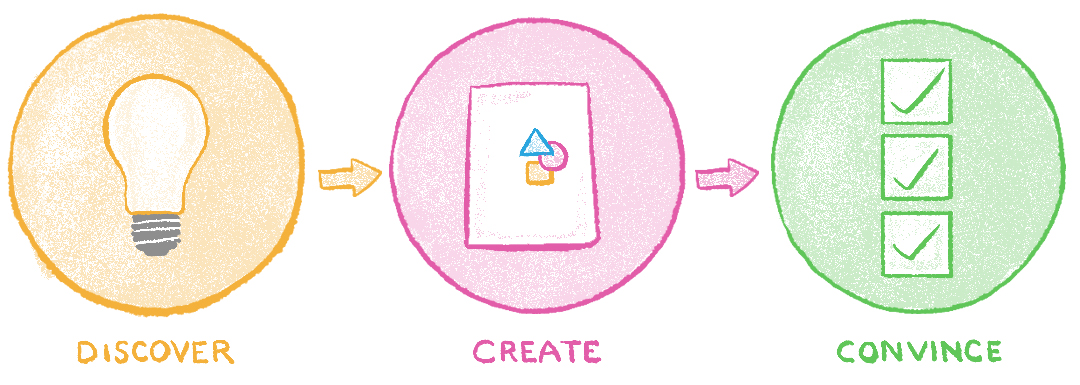
SEO is SEO. Whether you’re trying to reach customers, businesses, or just trying to get strangers to read your musings, the same basic principles apply:
- Discover what people are searching for.
- Create something that can satisfy them.
- Convince Google that what you created can satisfy them.
You’ll do this over and over in B2B SEO.
However, because of how marketing works in the B2B world, you can expect a few particularities in B2B SEO that you wouldn’t necessarily count on in other spaces.
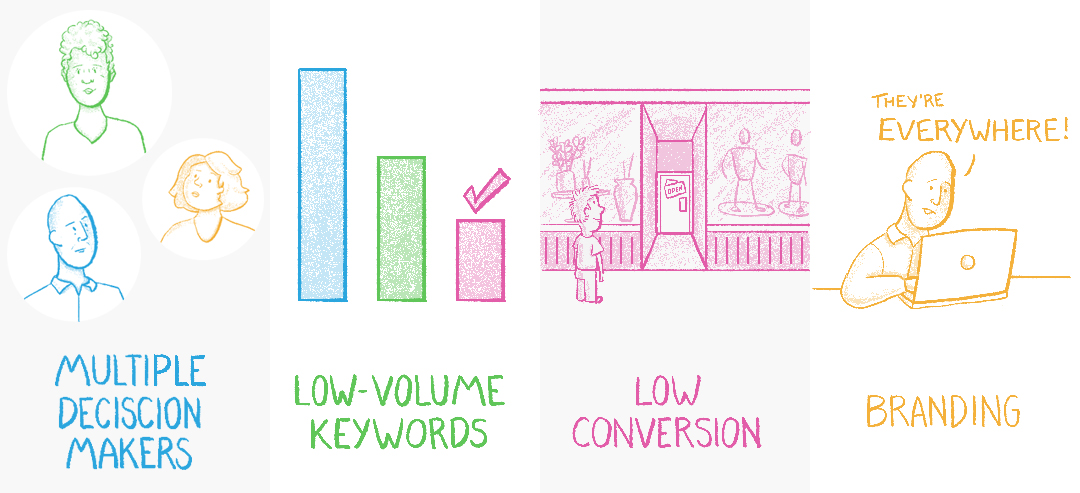
1. B2C SEO assumes a single buyer; B2B SEO assumes multiple decision makers
Because B2B purchases tend to be significant, long-term investments, more people need to weigh in on the buying decisions. Practitioners, managers, and executives will each approach the decision with very different problems in mind—so you can expect them to be searching Google for very different queries.
That means that a B2B company will need to have pages optimized for:
- Answering tactical questions from practitioners (e.g., “How to increase email open rates”)
- Answering high-level questions from executive stakeholders (“how to scale marketing teams”)
- Answering a wide range of questions for managers (“email marketing best practices,” “best email marketing software,” “HubSpot vs ActiveCampaign,” etc.)
And depending on what you’re selling (and whom you’re selling to), that range of personas can get rather wide. I’ve worked with clients targeting as many as nine different personas when it came to organic search—it’s possible that you will need to target more.
2. B2B SEO focuses on lower-volume keywords than B2C SEO
When July rolls around in the US, people Google the term “how to make ice cream” more than 30,000 times.
But you know how many times a month people Google “industrial gelato machine”? About 30.
A good B2C SEO can spend 40 hours on a blog post that brings in 30,000 new organic search visits every month—and not need to do a great deal of keyword research. But a B2B SEO needs to spend a lot more time sourcing and grouping related keywords into topics that can be addressed with a single blog post—and even then, that post might only bring in a few dozen new organic views every month.
If you’re coming from a background in B2C SEO, expect to recalibrate your sense of what makes a keyword attractive. The B2B space is smaller than B2C, and that means your SEO strategy needs to account for high-value, very low-volume keywords.
3. B2B SEO converts less organic traffic
Of the 30,000 people Googling “how to make ice cream,” a few hundred are going to buy an ice cream maker.
But I bet zero business managers are going to purchase an industrial piece of equipment right after they’ve Googled “industrial gelato machine” for the first time.
B2C SEO has more search volume and fewer decision-makers—which means it’s far likelier to convert a visitor to a customer. But the B2B space has a much longer sales cycle, more stakeholders, and higher prices.
That means your B2B SEO content shouldn’t be built (nor expected) to immediately convert cold organic visitors into sales. People Googling in the B2B space aren’t ready to buy anything yet. They’re looking for the tools and information they need to do their jobs. There may be some high–purchase intent searches in your industry that are the exception to this rule, but it’s not the norm.
That may sound like a downer, but it comes with an upside: B2B SEO tends to have less ecommerce competiton. If you’re selling a solution to consumers, you’re up against Amazon, Walmart, eBay, and other ecommerce giants when people Google your product category. Ecommerce SEO has some of its own best practices. You optimize a product page differently than how you’d optimize a blog post. B2C SEOs usually need to take these into account when making their strategies. In B2B SEO, you tend to be competing with product, content, and home pages more so than ecommerce product pages—which makes B2B a bit simpler on this front.
4. B2B SEO emphasizes thought leadership and branding
Because B2B searchers aren’t likely to convert on their first visit, B2B SEO tends to be more about establishing the brand in the searcher’s memory than getting them to make a purchase.
That means B2B SEO isn’t just about making sure your website shows up when people search for your product category. It’s about getting your audience used to seeing your website in the SERPs when they Google questions related to their job.
SERP = “Search engine results page,” or the page that you see immediately after you Google something.
You know, this:
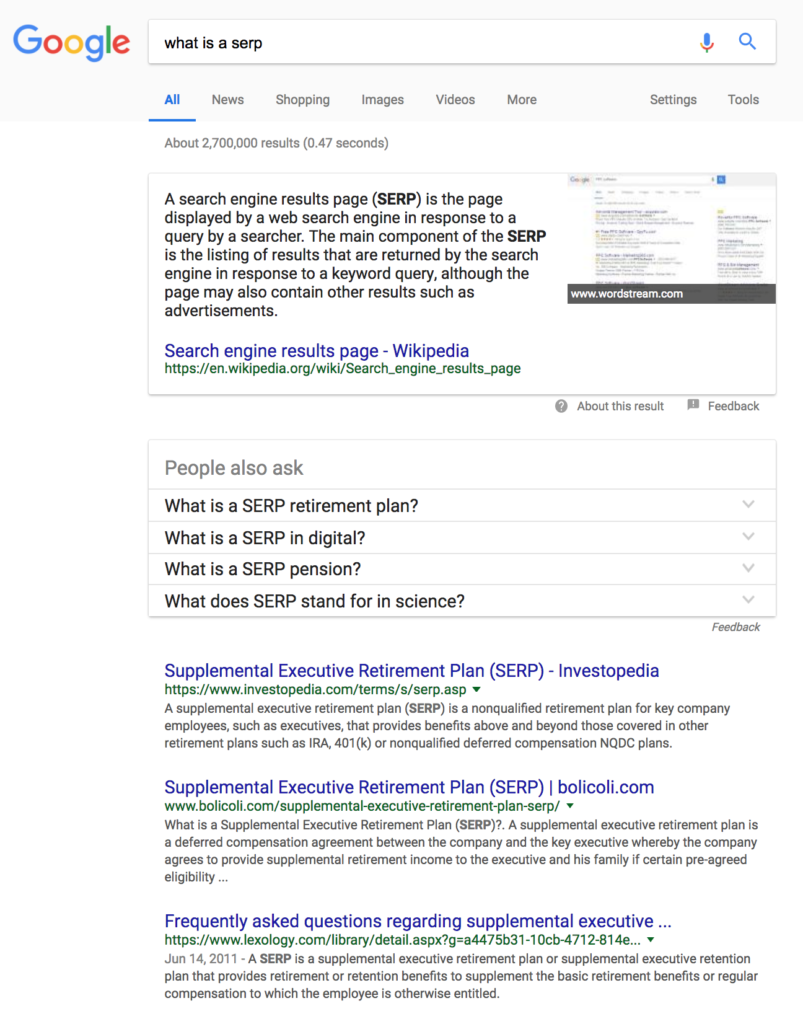
(We’re all familiar with SERPs, but there can be some variation in what they look like. We cover that in our guide to SERP features.)
A good B2B SEO strategy builds trust in your market. It shows the people you’re trying to reach that they can count on you to help them solve their problems.
How to make a B2B SEO strategy
If you’re responsible for writing an SEO strategy for your B2B company, where do you start? Here’s a step-by-step formula for writing an SEO strategy that wins traffic in your market. (And yes, we do this for our clients—so if you want a hand, we should talk.)
SEO is a nuanced discipline, and there’s no shortage of advanced tactics out there. But this is a guide for beginners, so we’re starting simple. At its core, every good B2B SEO strategy answers three questions:
- What are our people looking for?
- How will we satisfy our people?
- How will we convince the algorithms that we’re satisfying our people?
The entire SEO industry is built around answering these questions. We’re going to take a high-level tour through all three, with some specific dos and don’ts to keep in mind in the B2B space, but first we need to address something that you need to do before building your SEO strategy.
Before you start: do your audience research
“Our people” is the most important element of all three B2B SEO strategy questions. To do B2B SEO right, you should already know who your market is. You’ll likely need to account for specific types of decision-makers, practitioners, and other stakeholders in the companies you’re trying to reach. This gives you an idea of what jobs you’re helping people do, which is the key to making sure you’re focusing on relevant search terms.
Your internal documentation will likely tell you most of what you need to know in terms of what a marketing qualified lead will look like. However, if you’re like me, you also want to get an idea of what kinds of people consider both your offerings and your competitors’ offerings.
I use Sparktoro for this kind of audience research. With Sparktoro, I describe the audience I want to learn more about (usually the one my clients are trying to reach), and it gives me data on demographics, years of professional experience, geography, frequently use search tools, and more. It’s an easy tool to use, and their free plan is no joke. Check ’em out!
1. B2B keyword research: “What are our people looking for?”
SEO starts with understanding what people in your market are typing (or speaking) into Google and other search engines—these are called keywords (or “queries,” or “search terms”). B2B You can rank for all kinds of keywords—but if nobody’s searching for them, they’re not going to do you any good.
Your B2B SEO strategy will rely heavily on your keyword research. And good B2B keyword research involves a handful of elements:
- Search engine users: the people using Google to find you, your competitors, and anything else they’re looking for.
- Keywords: the terms users plug into search engines
- Search intent: the objective people have in mind when they search a given keyword
- Keyword search volume: how often a given keyword is searched (usually per month)
- SERPs: What shows up when a keyword is searched
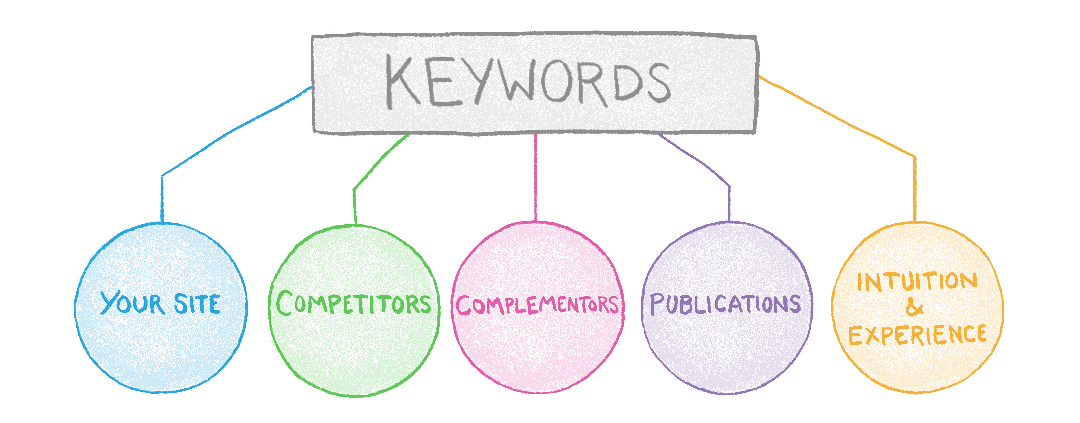
A few quick notes before we jump into the basics of B2B keyword research:
- Keyword research can go on forever. I enjoy it a lot, but it’s not for everyone. Keyword research gets dizzying after a while, and it will eat up all your content strategists’ time if you let it.
- You will need a paid keyword tool. We’ll look at some free tricks for finding ideas, but if you want to do real research, expect to pay for the right tools. Ahrefs, SEMrush, and Moz are popular tools to use—I rely on Ahrefs.
Determine which keywords you already rank for
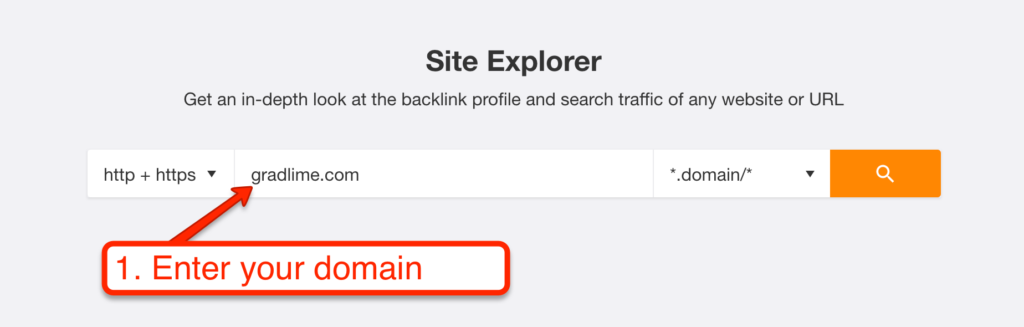
First thing you want to do is get an idea of what you’re already ranking for. You can grab this data from the Google Search Console, or from your keyword tool.
1. Enter your own domain
2. Go to the organic keyword report
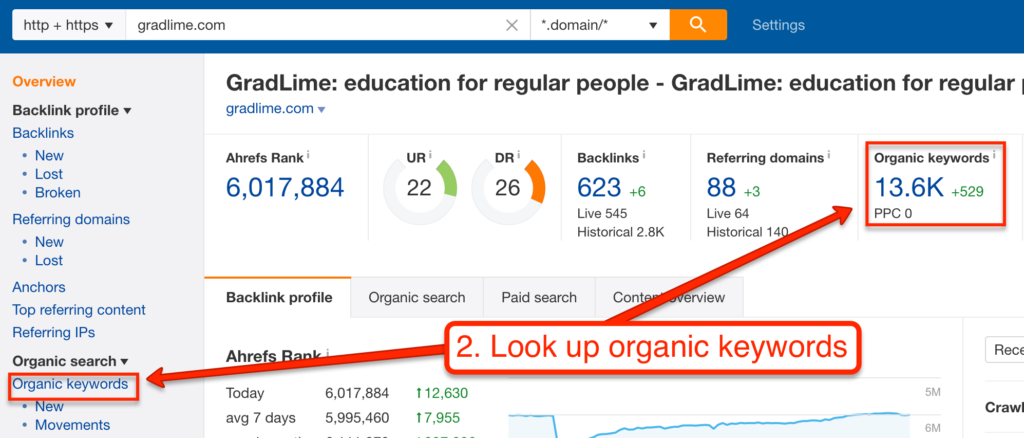
3. Export those keywords.
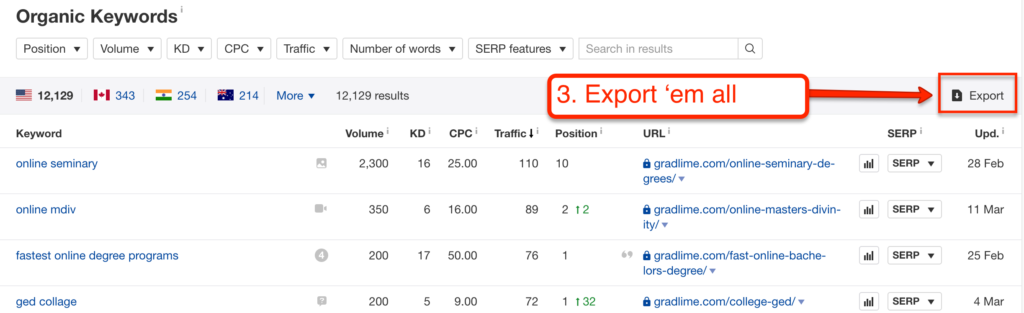
Any exported list should give you the keywords you rank for, the URL that ranks for each keyword, the position that URL ranks in the SERPs, and the keyword’s search volume.
With this list, you’ll know where you’re showing up in the SERPs. This is important because you don’t want to create new content that competes with what you already have. If you rank at the bottom of page 2 for a certain result, you may not need to start from scratch—you might just need to brush up your existing content.
You’ll reference this list as you compare the keywords you rank for to what people are already searching for in the market.
Get keywords from your competitors
Do the same thing with your competitors’ websites that you did with your own. A good SEO tool will allow you to export all that data into a spreadsheet.
Get keywords from publications
Same story, different kind of website. Depending on your industry, there may be some publications in your niche that are attracting a lot of organic traffic. It doesn’t hurt to see where that traffic is coming from, either.
So for example, if you were trying to reach business leaders in the fintech niche, you would probably want to see what kind of keywords fintech blogs like The Financial Brand and Daily Fintech rank for.
Get keywords from complementors
Sometimes there are players in your space who aren’t competing with your product. But they are really hitting content out of the park. It’s important to get an idea of what they’re ranking for, too.
You don’t need to do this for every single complementor in your space. But if there’s a non-competitor whose blog is really popular in your market, you should find out what they rank for.
For example, if you’re in the content marketing game, you need to pull keywords from Buffer’s blog. (But good luck outranking them!)
Good old-fashioned intuition
Sometimes you just have a hunch that people are looking for something. Maybe it’s a frequently-asked question that you hear a lot in real life. Maybe it’s a problem that has kept you up at night, and you don’t think you’re the only one.
Intuition is a phenomenal source of keywords—but don’t stop there.
Plug those gut-instinct keywords into your SEO tool, and check out what sort of search volume they get. Export similar, related, and suggested keywords as well.
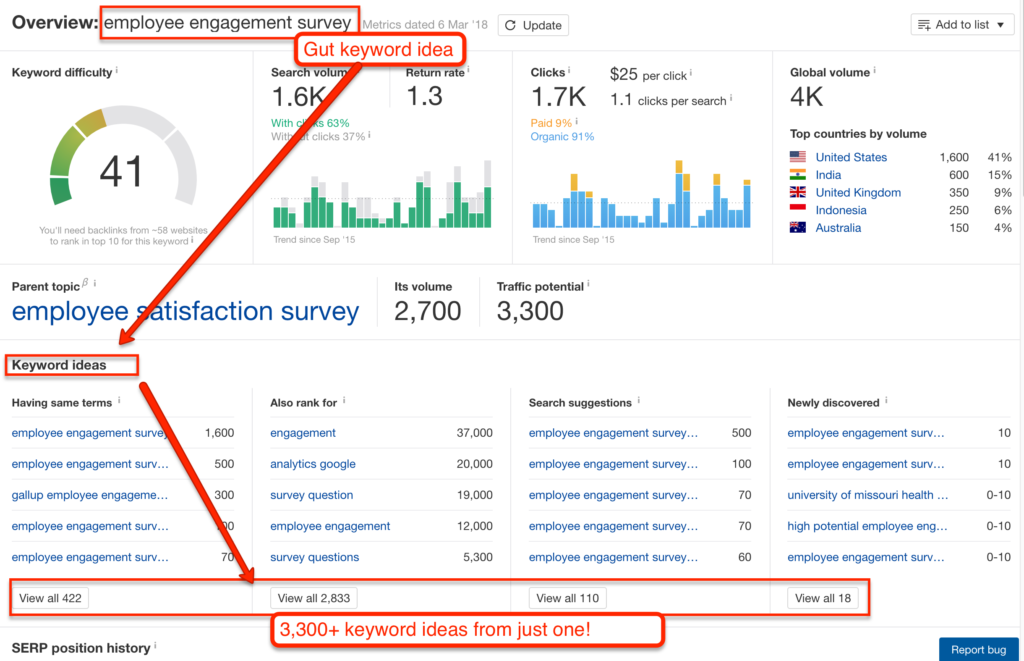
Ahrefs is particularly helpful on this front. I wanted to know what kind of stuff people were Googling on the topic of employee engagement surveys. So I looked it up in their keyword explorer.
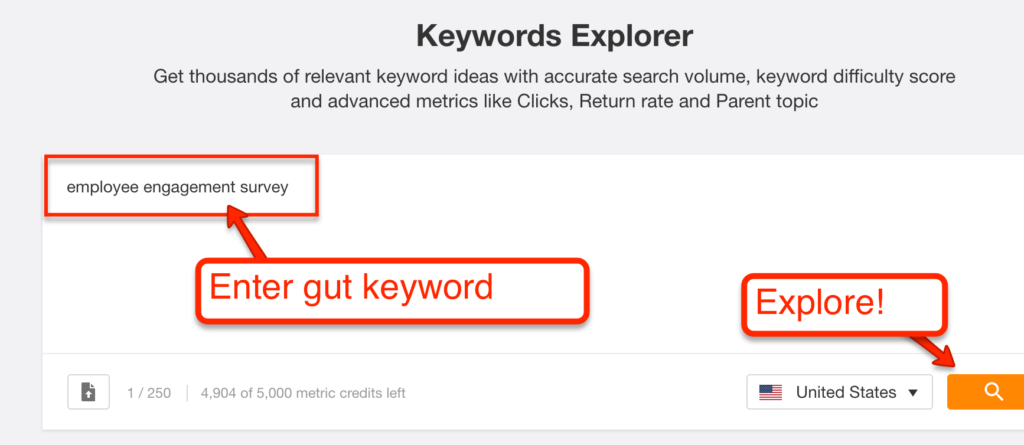
Turns out there are more than 3,300 related keywords that people are Googling:
Vet your keywords, then group them by intent
If you’ve pulled all this keyword research from your industry, you’re probably sitting on thousands of keywords. Maybe even tens of thousands.
Time to whittle that list down.
First, throw out any keywords that don’t have anything to do with your market. For example, there are 37,000 monthly searches for “engagement”—but odds are those people aren’t looking for employee engagement resources. Throw that one out.
The real job here is to take inventory of what people are really looking for. The keywords just give you an idea of the vocabulary your market uses.
You need to look past that, and start grouping these keywords by search intent. Marketers (and the keyword tools they use) regularly group search intent into four main buckets:
- Informational: The objective is simply to acquire knowledge. In a B2B context, an example of this might be, “how to do audience research.”
- Commercial: The objective is to identify goods and services that the searcher may intend to purchase, e.g., “best audience research tools for marketers.”
- Transactional: The objective is to make a transaction, e.g., “free audience research software.”
- Navigational: The user already knows where they want to go; they’re just using the search engine to get there, e.g., “Sparktoro.”
These buckets are helpful, but true strategists go deeper than this. As you go through those keywords, take note of the specific intents that people have. For example, people looking for “best building automation systems” are probably on the hunt for multiple BAS options. People looking for “improve office air quality” are looking for tips to, well, improve the air quality in their office.
Identify your generic product category terms
The most obvious outcome of B2B SEO is showing up when people Google your product category. This is going to be the lynchpin of your keyword research. If you make industrial gelato machines, you should rank for “industrial gelato machines.” If you make commercial white noise makers, you should rank for “commercial white noise makers.” Your B2B SEO strategy absolutely needs to identify the search terms people use when they’re looking for the offerings you provide.
Here’s the cool thing about B2B keyword research: you get to decide where you play. Product categories stack: “water conservation software” is a subset of “environmental management software,” which is a subset of “ESG software.” Depending on your positioning strategy, your product category can be as broad or as narrow as you want.
What you need to do is identify a small list of keywords that generally contains the category of offering you provide. These are the vital search terms that you’re going to track your rankings and progress against—and they’re also the ones your executives will be most concerned about.
Best practices for B2B keyword research
By this point in the game, you’ll have done your homework. You’ll know how people find you, your competitors, and other players in your space. You’ve started wrapping your head around the kinds of things that your market is looking for when they use Google for work.
There’s a host of nuances to keep in mind when it comes to keyword research. But if you play by these best practices, you’ll be off to a strong start:
- Do NOT get lost in the weeds. Keyword research will take as much time as you set aside for it, and then some. But you can do effective, high-level keyword research quickly, too. Britney Muller at Moz says, “Keyword research doesn’t have to be a marathon bender. A brisk 30-minute walk can provide incredible insights—insights that connect you with a wider audience on a deeper level.” (Her 30-minute guide to keyword research is en pointe, by the way.)
- Group keywords by intent. You don’t want to waste time writing a new blog post for every single individual keyword. Instead, assign each keyword to a general search intent.
- Consider the difficulty. Most SEO tools will give each keyword a “difficulty score” of some sort. The lower the difficulty score, the easier it is to rank for the term. SEO tools make this score by weighing different factors on the currently-ranking content, like links, domain authority, etc. Factor this into the mix as you’re grouping keywords, so you can grab the low-hanging fruit.
- Prioritize relevance over search volume. Fifty views from the right people is far more valuable than 50,000 views from people who have no reason to even remember you. At Overthink Group, we develop systems for scoring keywords and topics based on their relevance to the individual client’s marketing strategy—this way we’re only focusing on opportunities that reasonably connect to the client’s end goals.
- In fact, expect to chase low-search volume concepts. This is B2B SEO, so odds are good that your market is small enough for the truly golden keywords to have very low search volume.
2. “How will we satisfy our people?”
This is where it gets real.
You’ve determined what your market is looking for. Now it’s time to figure out how you’re going to give it to them.
Another way of asking this question is, “Now that we know what they want, what will we make for them?”
Like with keyword research, there’s a lot of nuance to explore beyond the scope of this post. But this will give you the gist of the most common ways to satisfy those searches.
General product category SEO
If you make industrial gelato machines, you should rank for “industrial gelato machines.” If you make commercial white noise makers, you should rank for “commercial white noise makers.” The most obvious outcome of B2B SEO is showing up when people Google your product category.
That is much easier said than done. There’s a lot to explore here, but at the very least you should make sure you’ve done the following:
- Add your product category to your home, pricing, and features pages’ <title> tags.
- Mention your product category in tandem with your brand name when you’re writing content—especially when you’re writing content that lives on another site. (It should definitely be in your “about” boilerplate for press releases, company LinkedIn profile, and position descriptions of C-level individuals’ LinkedIn resumes.)
- List your product on review sites (if you make software, you better be on G2 Crowd and Capterra), and ask your customers to review you.
- Reach out to people who manage “best of” lists in your industry, and ask them to add your product (with a link to your home page) to their appropriate lists.
Now that we’ve covered the obvious, let’s look at how to gain traffic for those other topics you grouped together.
Dealing with the big 4 B2B product problems
Your own SEO strategy will be informed by your audience, your product category, your competitors, and so forth.
However, most of the questions your audience will have about your offerings (and your competitors’ offerings) can be grouped into four categories:
- Capabilities: People want to know what your product can do. This entails features, integrations, demos, and the like.
- Contributions: Beyond capabilities, people want to know what they can do with your product. This includes new team capabilities, risks mitigated, time and costs saved, competitive advantages, and similar topics.
- Costs: People want to know that your product is worth what you charge for it. This means you need to address opportunity costs, pricing models, implementation time, and similar subjects.
- Concerns: When considering a big purchase decision, people naturally ask, “What could go wrong?” A smart B2B SEO strategy will address concerns around security, scalability, support, onboarding, etc.
In order to address these problems, your B2B SEO strategy will likely need to involve the following kinds of pages:
- Product pages: Describing your offerings, specifically their features and capabilities.
- Solution pages: Mapping your offerings to the disciplines and felt problems that your audience experiences.
- Pricing pages: Articulating what you charge for the offerings you provide.
- Testimonial pages: Describing how other customers have used your product to realize success.
- Case studies: Showcasing how your product has materially contributed to your customers’ success.
- Integrations pages: Showing how your product integrates with the systems your potential customers already use.
- Security & compliance pages: Detailing just how safe your customers will be.
These are the very basics—a full-fledged B2B SEO strategy will also account for product comparison, competitor alternatives, and buyer consideration factors—but that deserves another article.
Best practices for creating B2B content that ranks
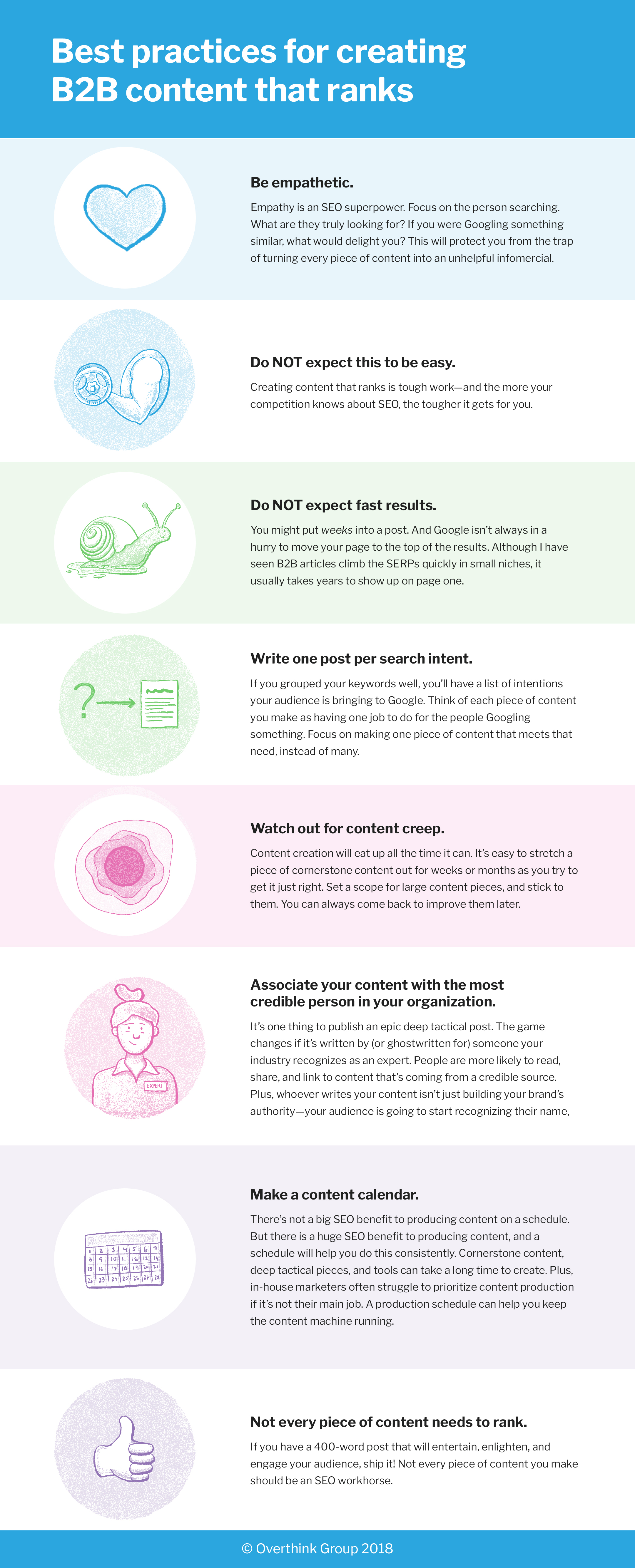
- Be empathetic. Empathy is an SEO superpower. Focus on the person searching. What are they truly looking for? If you were Googling something similar, what would delight you? This will protect you from the trap of turning every piece of content into an unhelpful infomercial.
- Do NOT expect this to be easy. Creating content that ranks is tough work—and the more your competition knows about SEO, the tougher it gets for you.
- Do NOT expect fast results. You might put weeks into a post. And Google isn’t always in a hurry to move your page to the top of the results. Although I have seen B2B articles climb the SERPs quickly in small niches, it usually takes years to show up on page one.
- Write one post per search intent. If you grouped your keywords well, you’ll have a list of intentions your audience is bringing to Google. Think of each piece of content you make as having one job to do for the people Googling something. Focus on making one piece of content that meets that need, instead of many.
- Watch out for content creep. Content creation will eat up all the time it can. It’s easy to stretch a piece of cornerstone content out for weeks or months as you try to get it just right. Set a scope for large content pieces, and stick to them. You can always come back to improve them later.
- Associate your content with the most credible person in your organization. It’s one thing to publish an epic deep tactical post. The game changes if it’s written by (or ghostwritten for) someone your industry recognizes as an expert. People are more likely to read, share, and link to content that’s coming from a credible source. Plus, whoever writes your content isn’t just building your brand’s authority—your audience is going to start recognizing their name, too.
- Make a content calendar. There’s not a big SEO benefit to producing content on a schedule. But there is a huge SEO benefit to producing content, and a schedule will help you do this consistently. Cornerstone content, deep tactical pieces, and tools can take a long time to create. Plus, in-house marketers often struggle to prioritize content production if it’s not their main job. A production schedule can help you keep the content machine running.
- Not every piece of content needs to rank. If you have a 400-word post that will entertain, enlighten, and engage your audience, ship it! Not every piece of content you make should be an SEO workhorse.
3. “How will we signal quality to search engines?”
In phase one, you discovered what your audience was searching for. In phase two, you made content that can satisfy those searchers.
Most of the hard work is done.
Now you need to check some boxes to help search engines recognize that you created something that will satisfy your audience when they Google those keywords.
If you can do that, then your content will climb those SERPs and start winning all that sweet, sweet B2B organic traffic.
Again, there’s a TON that could be said on this, but if you start by focusing on these areas, you’ll have most of your bases covered.
Publish content by humans, for humans (don’t be an AI SEO junkie)
Google has repeatedly stated that their algorithm is designed to promote human-written editorial content—which means 2024 is NOT the year to outsource your B2B SEO content production to AI. (Besides this, humans generally don’t like reading content that feels like it was machine-written.)
“But Jeffrey, our competitors are churning out hundreds of blog posts a week with AI!”
That’s great for you! If other players in your space are going all-in on AI-generated content, they’re practically inviting you to monitor their content performance and write better, more E-A-T (expert, authoritative, trustworthy) content than they’re cranking out. I’d recommend closely following your competitor’s blogs and running them through an AI checker to see just how human-sounding the machines think it is. If your competitors are ranking with content that smacks of generative AI, you have an opportunity to dunk on them with more natural-sounding (and hopefully more insightful) content of your own.
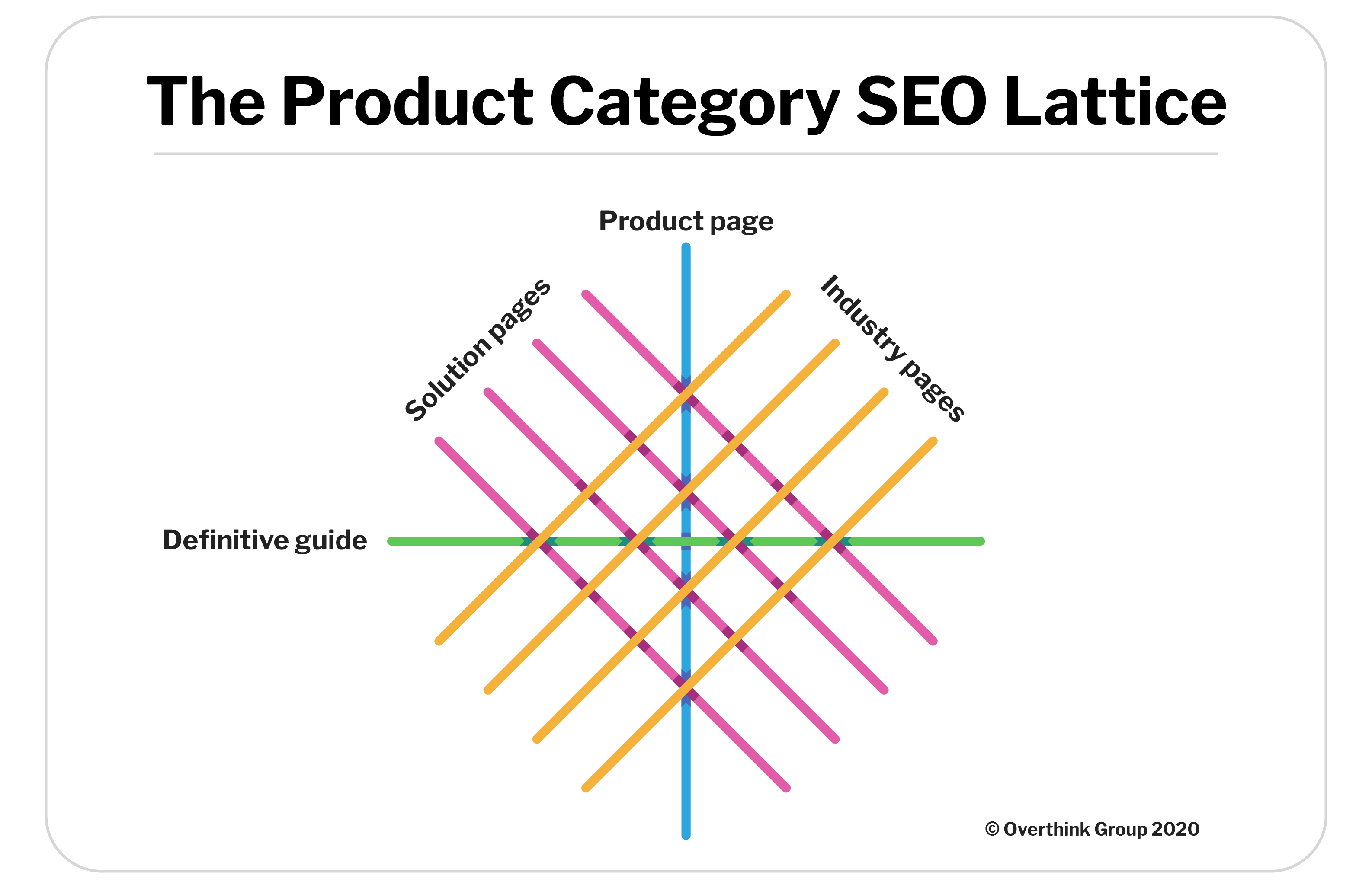
Build a lattice of internal links
One of the smartest ways to begin doing B2B SEO is to build a series of interlinked pages around your product category. By connecting your product pages, pillar pages, and various other page types, you can signal to Google which pages on your site are most relevant to your product category—and rank for that search volume.
I’ve written a guide on exactly how to do this here.
Use related terminology
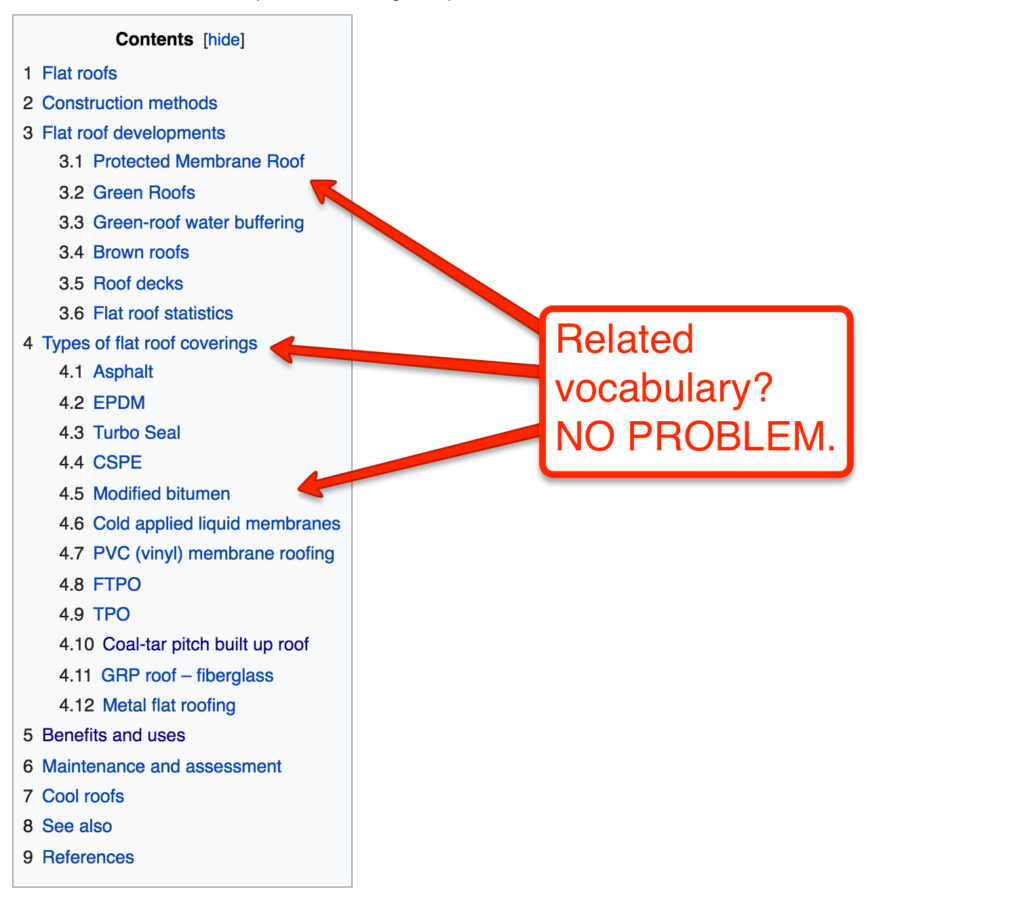
Google’s getting smarter all the time. It’s not just looking for a specific keyword being used over and over in the content. In fact, you’ll stand a greater chance of ranking by naturally using a wide swath of vocabulary associated with the topic you’re covering.
So if you’re writing a piece on flat roof coverings, you’ll want to mention terms like asphalt, EPDM, modified bitumen, and vinyl.
You’ll get plenty of these related terms straight from your keyword research. But if you want to make doubly sure, scan the table of contents of any related Wikipedia pages. (That’s where I grabbed those flat roof terms!)
This makes sense when you think about how human conversation works.
Imagine you’re at a local brewery and you overhear two conversations.
In the first conversation, two people talk about how much they love beer. They love dark beer and strong beer and beer that’s not too bitter.
In the second, two people discuss how much they love beer. But one of them prefers IPAs, and the other is more of a pilsner fan. They both enjoy a hoppy taste, they’re not too keen on stouts or porters, but they can tolerate a good winter warmer every once in a while.
Which of those groups would you assume knew more about beer? Probably the latter—specifically because instead of overusing the word “beer,” they’re using specific beer-related terms.
So when you’re writing authoritative content, use authoritative language.
Optimize your SERP clickthrough rate
One thing that influences a page’s ability to rank is click-through rate.
Click-through rate (CTR) = what percentage of people who see your link in the SERPs click on it
A few ways you can make your links more clickable:
- Write a compelling title. “Lead generation” is a lot less interesting than “Lead Generation: Everything You Need to Know”
- Keep your URLs simple, readable, and relevant. Remember, your B2B audience is probably using a work computer (or even a work mobile device). Your audience is going to feel a lot safer going to a webpage like com/hvac-cost-calculator than Yoursite.com/p8074gg00z=004
- Monitor page performance in Google Search Console. Keep an eye on which keywords translate to clicks—and if you notice that a page is showing potential with a keyword that isn’t in the title, consider adjusting the title to incorporate that keyword.
Build links to your content
One of the best ways to tell Google your content is worthy of organic traffic is to get other websites to link to it. This process is called link building.
Links work in B2B SEO similarly to how word of mouth works in real life. You’re more likely to try a new product, watch a movie, or visit a vacation destination if you’ve heard other people talking about it. The more people you hear talking about how much fun they had in Iceland, the more you want to go to Iceland.
Google works in a similar fashion. If hundreds of websites link to a piece of content you published, Google takes that as a clue that the content is good. (It must be, if all these people are willing to send their readers to another site for it.)
There are several ways you can build links to your content—and they all come down to promoting the content you produce. The specific promotion tactics you use will vary depending on the specific piece of content you’re promoting. However, you will almost always want to do the following:
- Tell your email list about new content (and ask them to share it)
- Reach out to influencers to let them know about it
- Add an email about that content to any relevant automated drips
- Expert-level: conduct original research and publish statistics—these are the things that journalists and bloggers love to link to!
You can find plenty of tactics for building links to your content online, but there’s really just one principle that you absolutely need to take to heart: attention begets attention. It’s far easier to get visits, links, and shares by telling your existing audience about your content than it is to make every piece of content win its own audience.
So when you make a new post, promote it to your subscribers, your employees, your customers—anyone who might find it relevant and valuable.
Wrapping up
If you’ve made it this far, you have enough working knowledge to start doing your own B2B SEO. Remember: there’s a lot of nuance to this discipline, and so there’s always more to learn and explore. But you’ll be heading in the right direction if you’re constantly doing one of these three things:
- Discovering what your market is searching for
- Creating content that can satisfy their searches
- Convincing Google that your content can satisfy their searches
Make a strategy. Do great research. Write stellar content. Set it up to win.
And watch the organic traffic pour in.
(And if you’d like a hand at getting started with this, let’s talk about it.)

this is the best article about B2B website seo and marketing.