
Lots of the conversation around search and visibility stays at the general level—and it can get pessimistic. But what happens when you dig into the niches?
Turns out with some of them, there’s a lot of opportunity just waiting to be grabbed.
For example, Zoe and I took a look at solution-aware SERPS for a specific type of solution, IoT device management platforms, using the data from our May report on niche B2B SaaS search as a starting point.
And this is … kind of hilarious.
The anatomy of IoT device management platform SERPs
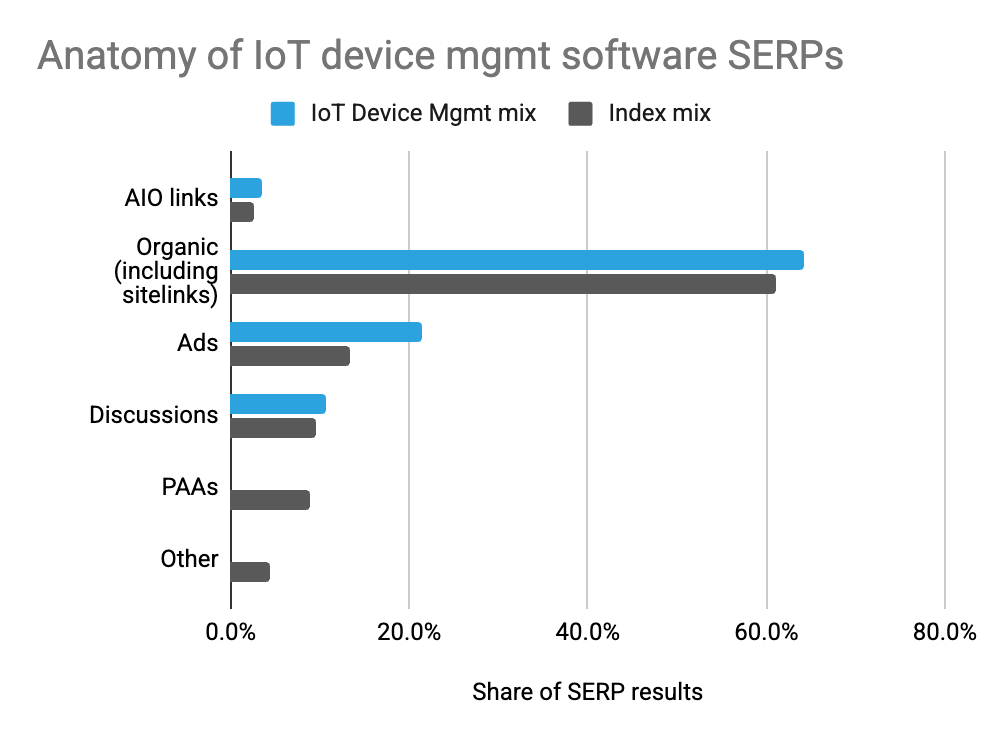
When you look at the raw types of search results, this niche isn’t all that different from the rest of the niche SaaS index. About 60% of the results are organic links, the rest is a mix of ads, discussions, and a few AIO links.
Of course, we need to look deeper than this to see what kind of content is actually showing up in these SERPs. So I checked each of these results and categorized them by the type of page that was ranking.
As you can see, two types of content dominate the SERPs by raw link count: listicles and forum threads.
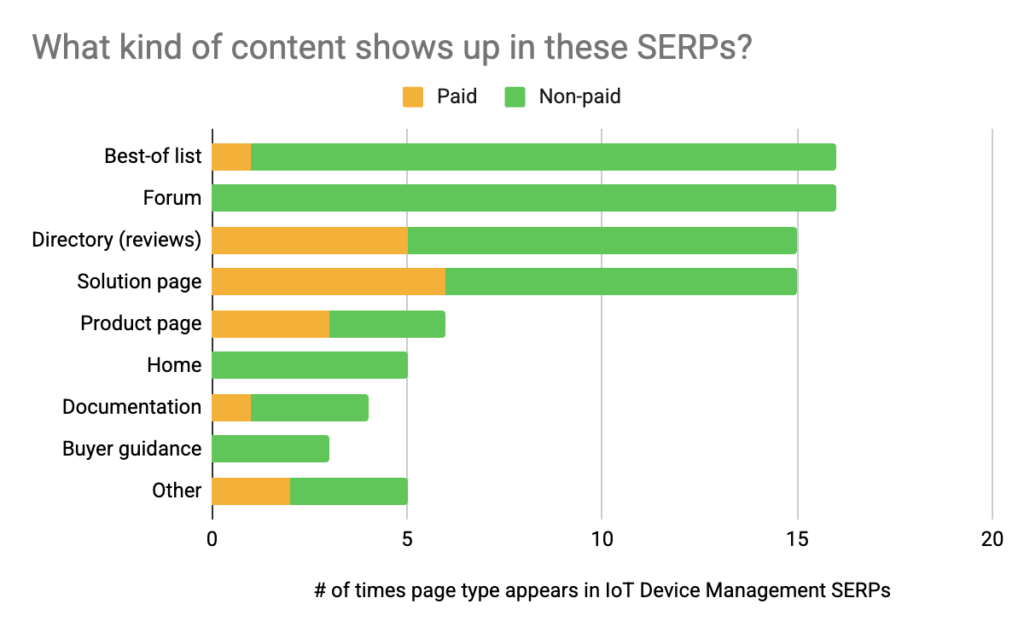
However, this is slightly misleading, as not all SERP links get equal real estate. Of the 16 links to forum threads in these SERPs, nine appear in “Discussions and forums” features.
As I’ve shared previously, Google loves triple-scooping user-generated content onto solution-aware SERPs (even if the threads are long-dead or off-topic). While discussions is the fastest-growing result type in our index, these links usually take up less space on the SERPs than their organic big siblings.
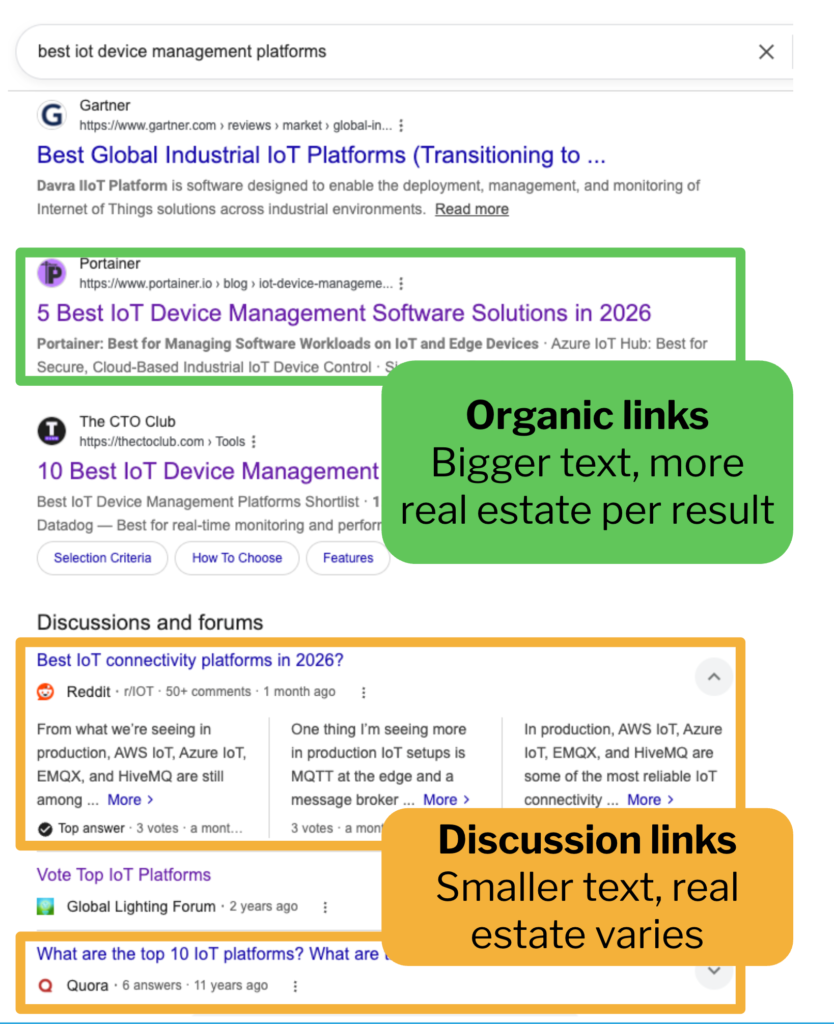
When we account for the size of these placements, best-of listicles are taking the largest share of the SERPs.
Google’s demand for best-of lists exceeds supply
We’re used to seeing listicles in solution-aware SERPs, so their domination in these SERPs is no surprise. In narrow categories like IoT device management, the surprising part is exactly which roundup lists make it into the search results.
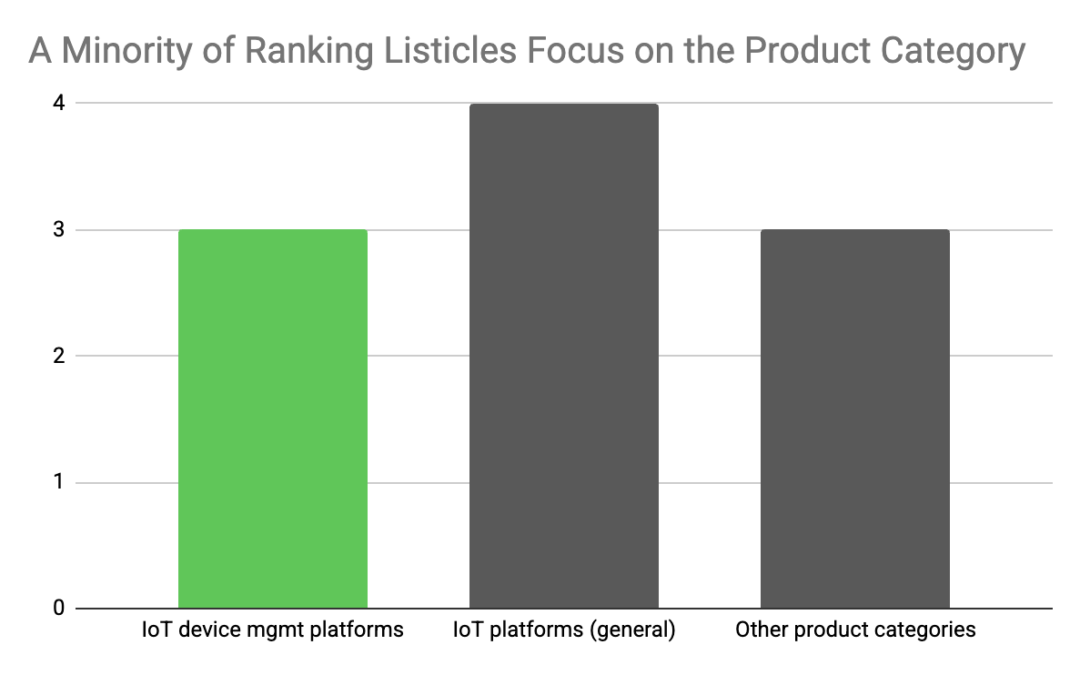
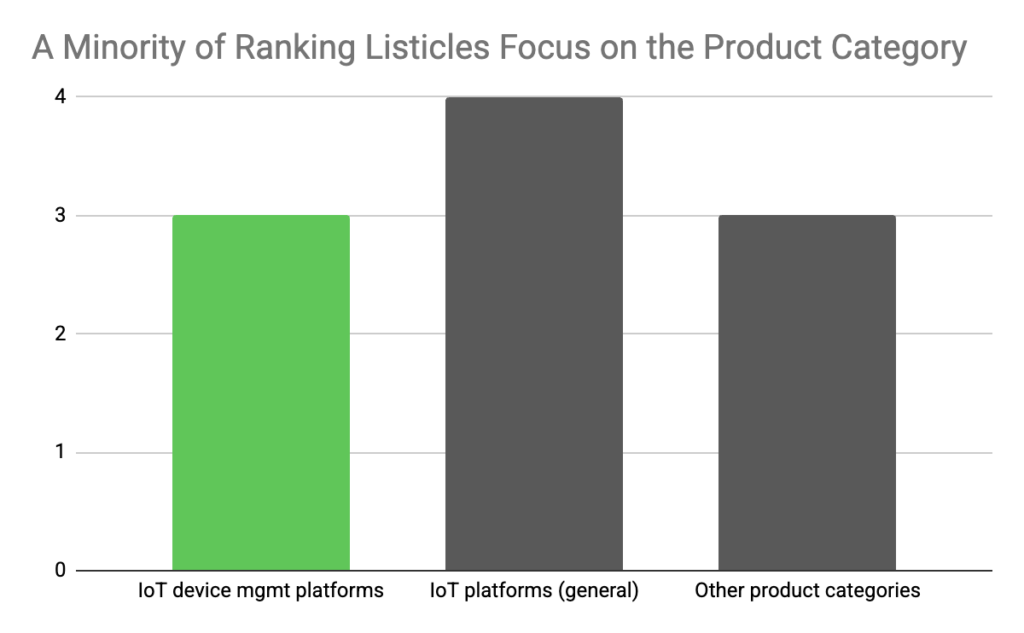
Ten individual listicles appear across the SERPs we evaluated. You know how many of them are even about IoT device management platforms?
Three.
What the heck?
Of the remaining articles, four are about IoT platforms in general, and the remaining three are about related IoT product categories. It’s not uncommon to find a few off-topic listicles in niche SERPs, but there are more than twice as many off-topic articles as on-topic ones.
This got me curious, so I looked through the websites of all 17 IoT device management solutions that either show up on the SERPs themselves or are mentioned in a ranking listicle (provided their website clearly positions them as a device management solution).
Of the 17 websites, only three have published a list of IoT device management platforms. Only one of them appears to have been updated in the past two years. Good job, Portainer. (We’ll come back to you later.)
As of now, the best explanation I have for why so many off-topic listicles rank here is that timely, on-topic lists barely exist.
Google’s pushing discussions that nobody’s having
It’s a similar story with the Reddit and Quora threads that make it onto the SERPs. In our index, seven unique forum posts appear on Google for IoT device management searches. But of those threads, only two are specifically about managing devices—the rest are about either general IoT or connectivity.
Oddly enough, it’s the off-topic threads that give more attention to IoT device management platforms. Together, four of these threads mention eight of the 17 players I identified.
Just like with listicles, Google is scrounging the internet for relevant, real human discussions, but the USG just isn’t there.
Product pages can gain SERP placement, but no guarantees
Ten of the 17 IoT device management brands have product or solution pages that overtly put them in this category. (“Product pages” designate a device management offering, whereas “solution pages” are dedicated to describing how branded offerings can be used to manage IoT devices.)
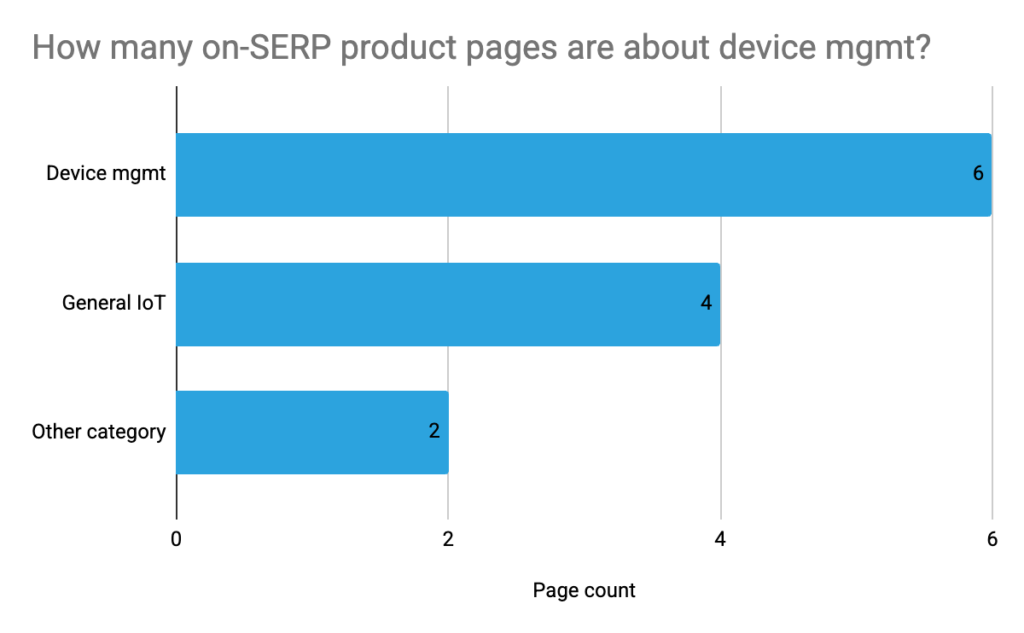
But a dedicated product page doesn’t guarantee SERP placement. Of the 10 brands with dedicated product or solution pages, only six have product or solution pages in the SERPs (and one of them only got there via paid ads).
Oddly enough, there are six additional product or solution pages in the SERPs that are not specific to IoT device management. Of these additional product pages, four feature general IoT offerings, and two are about related, but different product categories.
These SERPs are up for the taking
When it comes to IoT device management platforms, Google’s struggling to keep the results on topic—but part of that problem is a general lack of relevant content available.
Players in this space have a clear opportunity to boost visibility (both in the SERPs themselves, and in the LLMs scraping them).
The easiest way to boost exposure here? Write a (good) list of IoT device management platforms and include yourself.
That’s what Portainer did in March. They wrote a simple listicle informed by G2, Capterra, and Gartner reviews and put themselves in the number-one spot. As of June, this list ranks for searches like these:
- “best iot device management platforms”
- “best iot device management platforms for enterprises”
- “enterprise iot device management platforms”
Here’s the kicker: Portainer’s listicle is the only ranking page that puts them in this product category. No other listicle in the SERPs includes them. None of the Reddit or Quora threads in the SERPs mention them. They simply inserted themselves into the conversation with a relevant page.
All they had to do was hit publish.
This happens all the time in niche B2B search
Device management isn’t the only category like this—and it might be the case in your space too. If you’re playing in a narrow B2B category, the ticket to boosting your brand’s visibility in LLMs and traditional SERPs might just be publishing some helpful, on-topic content.
Of course, Overthink Group can help you with that. =)